Last Updated on November 27, 2025 by Katie
You keep sending out applications, but your inbox stays quiet. No calls, no invites, just silence. It feels like your resume gets lost in a black hole.
You’re not alone. Many job seekers rely on the same old document for every opening, then wonder why they don’t receive any responses.
The good news is that a few simple changes can make a big difference.
This guide walks you through resume tips to get more interviews using plain language and real examples.
You will learn how to fix your layout, choose the right content, use keywords, and show a bit of personality.
By the end, you will have a resume that is shorter, clearer, and focused on results, not just duties.
If you are ready to stop guessing and start getting more callbacks, let’s get into it.
Featured Career Opportunities!
* Get Paid to do Voiceovers from Home – FREE Mini-course Intro to Voiceovers.
* Work at Home as a Transcriptionist – Learn Transcription Skills with Transcribe Anywhere and Open Doors to New Remote Jobs.
* Start Your Own Thriving Proofreading Business – Learn how to get started in this FREE proofreading workshop.
* How to Start a Bookkeeping Business from Home – Free training series from the team at Bookkeepers.com.
Related reading:
- 10 best job search apps to find remote work quickly
- 11 weird interview questions and how to answer them
- How to write a cover letter that gets you hired
1. Keep your resume short so hiring managers actually read it
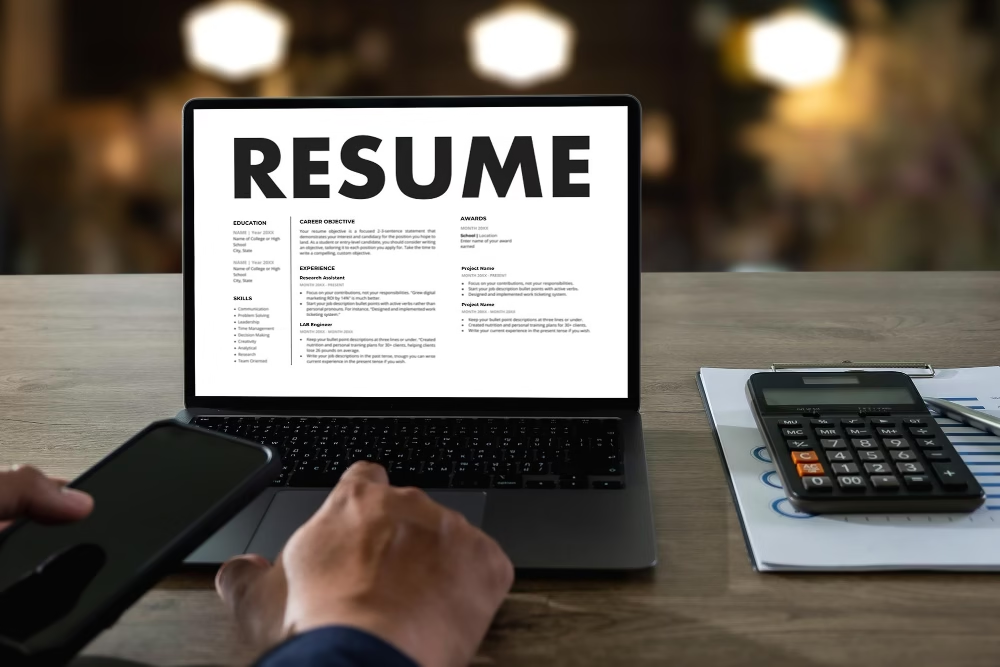
One of the top resume tips to get more interviews is to keep it short and to the point.
Recruiters scan resumes in seconds, not minutes. If yours looks long and crowded, they may not even start.
For most people, a one-page resume is enough. If you have 10 or more years of relevant experience, two pages can work, as long as every line earns its place.
Cut hard. You can:
- Remove very old jobs that are not related
- Delete long lists of basic duties
- Skip extra personal details like full address, hobbies from high school, or outdated skills
Shorter does not mean weaker. A focused resume makes your best skills easier to see.
Studies from top career services, like this Harvard resume guide, also stress clear, concise content over long descriptions.
Think of your resume as a highlight reel, not a full biography.
2. Use clear key sections so your resume is easy to scan
When your resume has a simple structure, it feels more professional and easier to read.
Both humans and applicant tracking systems (ATS) look for familiar sections.
Aim for these key sections:
- Contact info
- Summary
- Work experience
- Skills
- Education
Optional sections if they help you:
- Certifications
- Projects
- Volunteer work
Keep each section simple. Under Work Experience, list your job title, company, dates, and a few strong bullet points. Under Skills, list the tools, software, and abilities that match the job.
Use one clean font, maybe a second for headings. Keep headings consistent and use bullet points instead of big blocks of text.
Modern hiring tools and ATS scanners, like those reviewed in this AI-Powered Resume Builder Guide, also work better with simple formats.
Use a simple layout, not a fancy template
A graphic-heavy resume can look nice on your screen, but break when you upload it.
Most employers prefer a clean, basic layout. White space helps the eye rest. Your words do the work, not design tricks.
A few easy formatting habits:
- Use standard fonts like Arial, Calibri, or Times New Roman
- Keep font size between 10 and 12 for body text
- Align text to the left for easier reading
- Avoid images, text boxes, and icons that might confuse ATS software
When in doubt, choose simple over stylish.
3. Focus on your most relevant experience, not your entire past
Your resume is not your life story. If you treat it that way, it quickly gets long and unfocused.
Start by deciding what kind of job you want now. Then ask: “Does this job or detail help me look strong for that role?” If the answer is no, cut it or keep it very short.
A helpful trick is to create a “master resume” with every job, skill, and project you might want to include. Then, for each application, copy that file and remove anything that is not relevant.
For example, if you are applying for an office admin role, your experience as a camp counsellor 12 years ago probably does not help, unless you are showing leadership or organisation skills you cannot show elsewhere.
A focused resume looks stronger and makes you look like a clear match, not just a random applicant.
Highlight your strengths in the top third of the page
Most recruiters start at the top and may only read that part in detail. You want your best stuff right there.
In the top third of your resume, include:
- Your name and contact info
- A short summary
- A quick “Highlights” or “Key strengths” section with 3 to 5 bullets
These bullets can mention your most impressive results, years of experience, or key skills.
For example:
- 5+ years in high-volume customer support
- Raised customer satisfaction scores by 18 per cent
- Advanced user of Salesforce and Zendesk
This top section should make someone think, “I should keep reading.”
4. Write a short resume summary that sells you in a few lines

Another one of the best resume tips to get more interviews is to write a summary that sells your strengths.
Old-style objective statements talk about what you want. Employers care more about what you can do for them.
Replace your objective with a 2 to 3-sentence summary that covers:
- Who you are
- What you do
- How do you help employers
Example for customer service:
“Customer service specialist with 4 years of experience helping customers by phone, email, and chat. Known for staying calm under pressure and solving problems quickly. Looking to help a growing team improve response times and customer satisfaction scores.”
Example for office admin:
“Organised office administrator with 6 years of experience supporting busy managers. Skilled at scheduling, email management, and tracking details so leaders can focus on big tasks. Comfortable with Google Workspace, Excel, and handling confidential documents.”
Keep it friendly and clear. Focus on value for the employer, not just your goals.
Use keywords from the job description in your summary
Keywords are the important words from the job posting, like job titles, tools, and skills.
For example: “Excel,” “B2B sales,” “Zendesk,” or “project coordination.”
Using these words, when they are true for you, helps with ATS filters and shows the hiring manager you match their needs.
A simple way to use keywords:
- Read the job ad and highlight repeated skills and tools
- Pick 5 to 10 that you have and feel confident using
- Add a few to your summary
- Add the rest into your Skills and Work Experience sections
Keep it natural. Do not stuff keywords in just to have them.
5. Turn job duties into strong, results-based bullet points
Most resumes list duties: “Answered phones”, “Filed paperwork”, “Helped customers.” That does not show how well you did the job.
Shift from duties to results. A simple formula:
Action verb + what you did + how it helped
Examples:
- Weak: “Answered phones”
Strong: “Handled 50+ customer calls per day and solved issues within 10 minutes on average.” - Weak: “Did data entry”
Strong: “Entered and cleaned 300+ records per week with less than 1 percent error rate.” - Weak: “Helped with social media”
Strong: “Created 3 weekly posts that increased Instagram engagement by 25 percent in 3 months.” - Weak: “Worked the cash register”
Strong: “Processed 100+ transactions per shift while keeping cash drawer balanced.”
Results make your work real and believable.
Start each bullet with powerful action verbs
“Responsible for” or “helped with” sounds weak and vague. Strong action verbs make your bullets more confident without sounding like bragging.
Good action verbs for many roles:
- Office work: organised, updated, tracked, scheduled, and prepared
- Customer service: resolved, assisted, responded, handled, supported
- Retail: sold, recommended, restocked, processed, promoted
- Remote jobs: coordinated, communicated, managed, improved, delivered
You can find big lists of great verbs, like this guide with 185+ action verbs for your resume, and pick the ones that fit your experience.
Start every bullet with a verb and your resume will sound stronger right away.
6. Add numbers and facts to prove your impact
Next on the list of resume tips to get more interviews is to add numbers and facts to prove your impact.
Numbers make your achievements clearer. Even rough estimates are better than nothing, as long as you stay honest.
Think about:
- How many customers you helped per day or week
- How much time or money you saved
- How much you increased sales, sign-ups, or other results
- How many tasks you handled in a shift or project
Compare:
- “Helped customers in a busy store”
- “Helped 80 to 100 customers per shift in a busy store and kept wait times low”
Or:
- “Improved filing system”
- “Reorganised digital files so team members could find documents in under 30 seconds”
As you work, keep notes of wins and numbers in a simple document or notes app. That makes updating your resume much easier later.
7. Tailor your resume for each job so you look like a clear fit
Sending the same resume to every job often leads to nothing. Employers can tell when a resume feels generic.
A simple tailoring process:
- Read the job ad slowly.
- Mark the key skills, tools, and tasks they repeat.
- Adjust your summary, skills, and bullet points to match those needs where they are true for you.
- Move the most relevant experience higher on the page.
You can keep one “base” resume and save different versions for different paths, like customer service, sales, or admin work.
Career experts who share Proven Job Search Tips also recommend this approach because it usually leads to better matches and more callbacks.
Yes, it takes more time. But you are sending fewer, stronger applications, which is what gets results.
Match your skills section to each role you apply for
Your Skills section should not be a random list.
Group skills into types:
- Technical skills: Excel, Google Sheets, CRM tools
- Tools/software: Slack, Zoom, Zendesk, Shopify
- Soft skills: communication, problem-solving, teamwork
For each job:
- Move the most relevant skills to the top
- Remove skills that do not matter for that role
- Keep the list neat, not longer than 10 to 15 items
Include both hard skills (software, tools, languages) and soft skills, but let the job ad guide what you show first.
8. Show a bit of your personality without oversharing
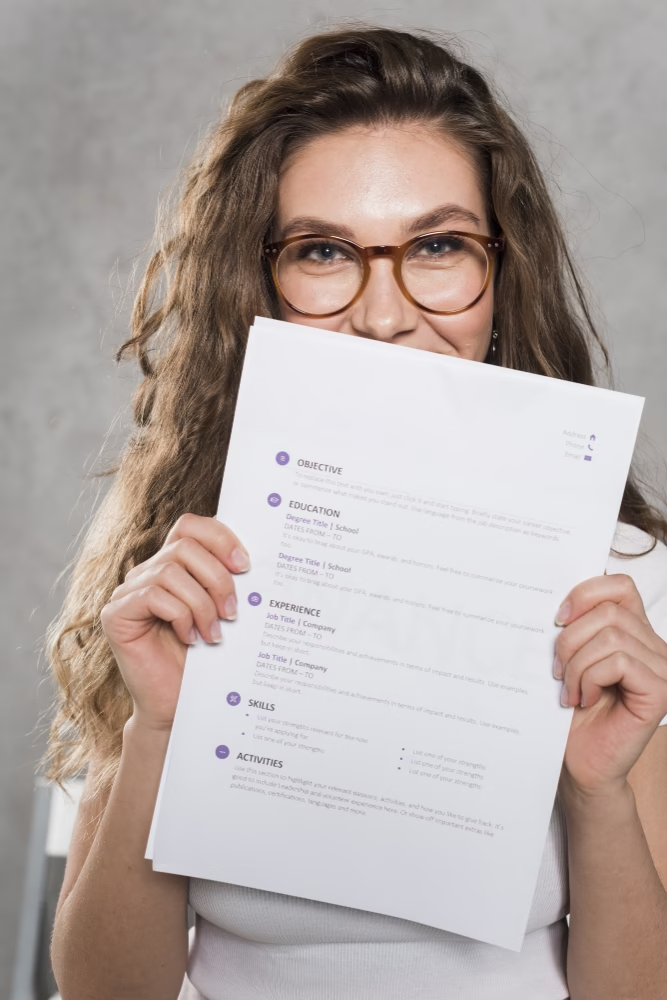
One of the best resume tips to get more interviews is to show your personality.
Hiring managers want to know they are hiring a real person, not just a set of bullet points.
You can add a short “Interests” or “Hobbies” line at the bottom of the resume. Keep it to one or two lines and pick items that show positive traits.
Good examples:
- “Interests: local soccer league, photography, personal finance books”
- “Interests: volunteering at animal shelter, hiking, learning Spanish”
These can hint at teamwork, discipline, or curiosity. They can also give interviewers an easy way to start a friendly chat.
Skip anything very personal or divisive, like politics, religion, or sensitive topics that might distract from your skills.
9. Make your resume easy to read with simple language
Fancy words do not get you hired. Clear writing does.
Use short sentences and everyday language. Break text into bullet points instead of big chunks.
Avoid heavy jargon and empty phrases like “results-oriented professional” or “hard worker” without facts to back them up.
Try this quick test: read each line and ask, “Is this clear and needed?” If not, rewrite or cut it.
Successful hiring managers also stress short summaries and focused bullets for modern resumes.
Recruiters are busy. A clean, readable resume shows respect for their time.
10. Proofread and get a second pair of eyes to catch mistakes
Typos and spelling errors can ruin a strong resume. Some managers will reject a resume right away if they see mistakes.
Use this mini checklist:
- Run spell check
- Read your resume out loud
- Change the font or print it to see it with “fresh” eyes
- Double-check names of companies and job titles
- Confirm dates and your phone number and email address
Then, if you can, ask a friend, mentor, or colleague to review it. Someone who knows hiring or good writing is even better.
Little details build trust. A clean, error-free resume makes you look careful and serious about the job.
11. Keep your resume updated as your skills and career grow
The last of the resume tips to get more interviews is to keep your CV updated and fresh at regular intervals.
If you only update your resume when you are desperate for a new job, it feels stressful and hard. You forget key wins and numbers.
Instead, set a reminder every 3 to 6 months to review and update it. Add:
- New achievements and projects
- New tools or software you learned
- Courses, certificates, or training
When you add new items, remove older or less useful ones so the resume stays short.
This is especially helpful if you have a career break or plan to return to work later.
Guides on Resume Tips for Career Gaps recommend keeping your document current so you are ready when the right role appears.
Keeping your resume fresh gives you confidence. You always have a ready, up-to-date document if an opportunity shows up.

Final Thoughts on Resume Tips to Get More Interviews
Strong resumes are not about fancy design. They are short, focused, and packed with clear results.
When you use these resume tips to get more interviews, you make it easier for employers to see your value.
You do not need to fix everything at once. Pick one or two sections to improve today, then apply for a few well-chosen roles that fit you.
Good luck with your next interview! You can do it!
Further reading:
- What to do after losing your job
- 15 common job search mistakes and how to fix them
- 10 simple steps to finding a career path you love
The post 11 Essential Resume Tips to Get More Interviews appeared first on Remote Work Rebels.
* This article was originally published here

 You want a rewarding, high-paid remote career